


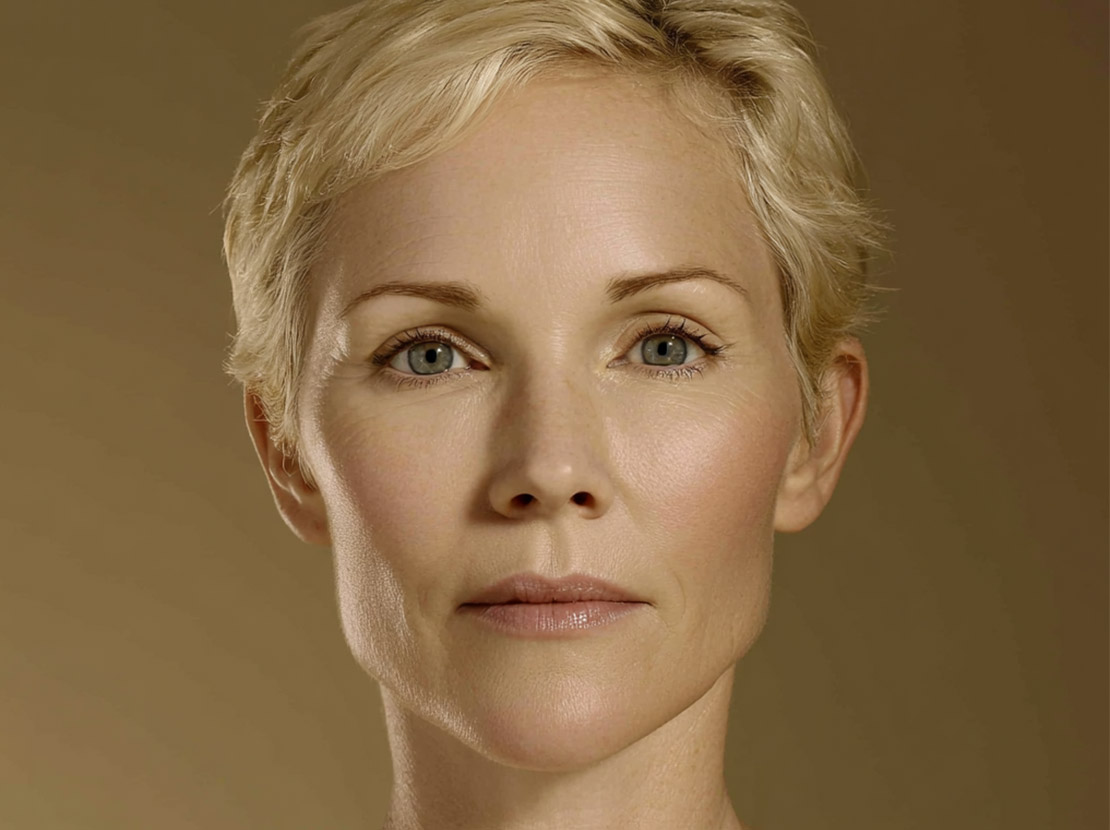
The deep plane facelift achieves natural facial rejuvenation by lifting the skin and the deeper structures together as a single unit.
The face often shows the earliest visible signs of aging: the skin loses elasticity and forms wrinkles, volume diminishes or shifts, and soft tissue descends from its original position under the pull of gravity. This produces the typical signs of aging such as hollowed cheeks, deep nasolabial folds, a softer jawline with jowls, and a loss of contour at the neck–chin junction, sometimes with a double chin. Many patients feel that their changed appearance no longer matches how they feel inside.
Remarks from colleagues, or friends and family about a ‘tired’ appearance can also exacerbate the problem. The aim of a deep plane facelift is to restore a fresher, more youthful appearance that reflects the patient’s self-perception, and without a mask-like result.
Deep Plane Facelift Procedere in Bern
The term ‘deep plane facelift’ refers to a current development of facelift technique in which the deeper tissue layers, in particular the SMAS (superficial musculoaponeurotic system) together with the tissue above it, are released, lifted and securely fixed as a single unit. This allows wrinkles to be smoothed in various regions of the mid and lower face and the neck, volume relationships to be harmonised, and sunken tissue to be repositioned in an anatomically correct way. The advantages of this technique are the robust tissue quality and good blood supply of the combined skin and SMAS flaps, together with the fact that only one plane of dissection is required.
In contrast to ‘mini-lifts’ and ‘skin-only lifts’ that are mostly limited to a superficial tightening of skin, the deep plane facelift corrects the supporting structures beneath the skin. Tension is transferred to the deeper tissue layers and the skin remains relaxed, producing a natural, long-lasting result with preserved facial expression.
A fresh, youthful appearance is not only achieved through smooth skin, but also through the proportions, volume and contours of a young face. These are improved by repositioning the deep tissues in a deep plane facelift. Where there is marked volume loss, an additional fat transfer (lipofilling) or replacement with artificial substances may be appropriate. Excess fatty tissue, especially on the neck and chin, can be removed minimally-invasive by liposuction (lipo-shaping, lipo-sculpting) in order to improve the facial contours.
We would be happy to consult with you at our AARE KLINIK in Bern’s Embassy District (Switzerland)
if you are interested in a deep-plane facelift. Just give us a call or use our online appointment scheduling system.
Considerations
When to consider a deep plane facelift:
- You suffer from the aging effects to your face or neck.
- You are affected by: sunken cheeks, deep nasolabial creases or wrinkles around your mouth, jowls, a double chin, an undefined chin-neck contour, loose and wrinkled skin on the face and/or neck.
- Your appearance does not coincide with your actual age (discrepant self-perception).
- Your appearance does not coincide with how others perceive you (discrepant external perception).
- Face and/or neck have lost their youthful contours and their volume.
- Your formerly oval face has become increasingly rectangular.
| Deep Plane Facelift: Overview | |
|---|---|
| Surgery Duration | 4–6 hours |
| Anesthesia | General anesthesia |
| Hospital Stay | 1 Night |
| Social Activities | 3 – 4 Weeks |
| Sports | 3 – 4 Weeks |
| Costs | starting at CHF 20’000 |
Consultation
A prerequisite to a successful operation is careful planning. This starts with a personal consultation at the AARE KLINIK. Clear communication of your wishes and expectations ascertain what you would like to improve. A comprehensive consultation, along with an explanation of the options and the scope of the procedure, will enable you to make an informed decision.
During the consultation, the medical history is taken, a physical examination is performed and digital photos are taken. Bone structure and soft tissue are assessed, and the thickness, texture and elasticity of the skin are tested. Based on this an individual treatment plan is drawn up and the goals of the operation are discussed and defined. A deep plane facelift is an extremely versatile operation that can be tailored to the specific needs of each patient.
It often makes sense to combine several treatment methods to achieve the best possible result (platysmaplasty/neck tightening, liposuction of the chin and neck, fat transfer, where indicated eyelid or skin resurfacing treatment). The pros and cons of the different surgical procedures, together with possible risks – and how to avoid them – are discussed. The personal and financial cost of having a facelift has to be carefully considered before the definitive treatment plan is agreed upon and documented.
To plan the operation and to make a risk assessment we require a full medical history (pre-existing conditions and previous surgery), information about current diseases (high blood pressure, diabetes, thyroid dysfunction), allergies or aversion to medications, and any important medical reports. Please bring any important medical information along to the consultation. Portrait photographs that show you in your youth are also relevant for the assessment of age-related and constitutional changes.
Procedure
A deep plane facelift needs to be tailored to the individual characteristics and needs of the patient. Thus every procedure differs. Common to all deep plane techniques is the limited release of the skin from the SMAS and the dissection of the SMAS together with the overlying tissue as a single continuous unit. The skin incisions are typically made in front and behind the ears, and where needed can be extended along the hairline. More important than the length of a scar is its quality and the optimal positioning within the natural folds of the skin and hair margins. A well healed and appropriately positioned scar will hardly be visible later on.
The lifted tissue is repositioned and fixed along anatomical vectors using secure, deep sutures. The chin line and the neck are often treated additionally with a platysmaplasty (tightening of the neck muscle), and where necessary excess fatty tissue, muscle or salivary gland tissue is removed, additional cheek volume is added using the patient’s own fat, and eyelid corrections are added in suitable cases.
The skin is closed with fine sutures, which are removed after a few days so as not to leave visible suture marks. At the AARE KLINIK we do not use wound drains; instead, we use special sutures (the Auersvald net) to prevent bruising (haematomas) and fluid collections (seromas) in the first 2–3 days after the operation.
A natural appearance and long lasting result are mainly dependent on the correction of the deep-layered structural tissues. As skin only has a covering and not a structural function, a permanent effect cannot be achieved by the tightening of skin. In a deep plane facelift, youthfulness is therefore returned through the specific treatment of the deep tissues, while the skin envelope is adapted and only excess skin is removed – without creating an artificial, ‘lifted’ appearance.
Risks
Serious complications after a deep plane facelift are extremely rare. Nevertheless, before the operation each patient should be informed of all the benefits, risks and possible complications involved. Lighter complications that usually heal without long-lasting consequences include swelling, bruising, a feeling of tightness and numbness of limited areas. Severe bruising (haematoma) should be treated and possibly surgically removed, as this may reduce blood flow to the delicate skin of the face and neck.
Infections, healing problems or more conspicuous scars occur less frequently. A temporary thinning of hair at the incision margins is possible. The risk of circulatory disorders of facial skin is increased in smokers, which is why smoking should be avoided for 2–4 weeks before and after the procedure. Very rarely, injury of a nerve with temporary weakness of the facial muscles can occur.
After a dermabrasion, laser treatment or chemical peel, redness of the skin might persist for several weeks or months; a change in skin pigmentation might also occur. In most cases facial scarring is very inconspicuous, but even with the use of fine suturing techniques, it is unpredictable as the healing process varies for each individual person.
General risks from facelift surgery include:
- Haematoma (bruising), bleeding and swelling
- Seroma (accumulation of wound fluid)
- Healing problems or infection
- Wound breakdown/dehiscence (separation of wound edges)
- Injury of nerves or vessels
- Numbness in area of operation (temporary or permanent)
- Circulatory problem of face and neck skin (skin slough)
- Scars
- Pigmentation changes (hypo- or hyperpigmentation)
- Hair loss (temporary, rarely permanent)
- Slight asymmetry
- Unsatisfactory aesthetic result
- Secondary surgery
- Thrombosis or embolism
Overall a deep plane facelift is a safe procedure when undertaken by an experienced plastic surgeon and patients are mostly satisfied with the results. You can help to minimise the risks by following the advice of your surgeon.
Preparation
Our aim is to make the time before and after your surgery as comfortable as possible. By following a few recommendations you can support our care:
To aid the healing process, avoid smoking for two weeks before and after the operation. Avoid medication that increases the risk of bleeding, like aspirin, non-steroidal anti-inflammatory drugs, as well as vitamins and homeopathic remedies for two weeks prior to the operation.
Prior to additional dermabrasion, laser treatment or a chemical peel, you may have to perform a pre-treatment with special ointments, and possibly antivirals. If you have short hair, it may be advantageous to let it grow before surgery, to facilitate the concealment of fresh scars. All chemical hair treatments (dyeing, bleaching) should be performed before surgery, as you should refrain from having any such treatments for at least 4 weeks after surgery. Deep plane facelift surgery is mostly performed as a short-stay procedure under general anaesthesia. Make sure that you can be collected and cared for by someone for 24 hours after the procedure.
Day of Surgery
In most cases a deep plane facelift is performed as a short-stay procedure with an over-night stay at the AARE KLINIK. In individual cases, when necessary, the procedure can be undertaken as part of a short inpatient stay in an affiliated private hospital.
During surgery you will receive various medications for your wellbeing. Depending on individual cases and the length of operation, you will have a general anaesthesia, in selected cases a local anaesthesia with sedation (twilight anaesthesia). For your safety, your heart rate, blood pressure, oxygen supply etc. are monitored during the operation.
After surgery the fresh sutures will be cleaned, covered with ointments and a light cotton or gauze dressing. You will be taken to the recovery room, where you will have continued monitoring until you awaken and are able to get up. After a few hours you will be allowed to return home; after a short inpatient stay you will remain overnight at the AARE KLINIK.
Already on the day of the surgery you should get up regularly for a few minutes in order to minimise the risk of thrombosis. You can use mild pain relief that reduces swelling and can be continued for the first few days after surgery. You should have someone to care for you continuously for 24 hours post operation. We also offer the possibility for a short inpatient stay at the AARE KLINIK in a single room with a nurse if required.
After Surgery
It is important to realise that recovery from an operation varies for every individual. During the first days after surgery you should keep your head and upper body in a raised position to prevent swelling.
The eye area can be cooled carefully with moist gauze. However, cooling of the cheeks and neck with ice should be avoided, in order not to compromise skin circulation. You should not perform any strenuous activities or physical exercises (sports) for several days after the surgery. Only take prescribed pain medication and do not take medication like aspirin. After dermabrasion, laser treatment or chemical peeling you might be required to use ointments or to take antiviral medication.
During the first 2–5 days after the procedure, you might experience significant swelling of the facial skin, which will usually subside after 2–3 weeks; slight bruising is possible. You might experience a slight loss of hair in the area of the surgery. It might take a few months before the hair grows again. Typically you will be back on your feet a couple of days after surgery and be able to resume your daily activities. Bandages and, if used, drains will be removed in the first days after surgery, after which you can take showers again. Full baths and excessive heat, however, should be avoided for several weeks until swelling has subsided. Most sutures are removed within a week.
Due to the fact that the swelling of facial skin lasts longer, the important appointments should be scheduled at the earliest 6 weeks after surgery. After removal of the sutures we recommend the start of an intensive skin and scar care with rehydrating creams and light massage. The fresh scars should be protected from UV radiation for at least 6 months, in order to prevent increased pigmentation.
Raised scars may require treatment with special silicone gel and cortisone injections in some individual cases. After surgery you will be examined at the AARE KLINIK at regular intervals, so that the healing process can be assessed until the final surgical result is achieved
Outcome
The healing process is gradual and it will take several months before the surgical result can be fully determined; the final result can usually be assessed after 3–6 months. Facial scars usually heal quickly and unobtrusively, but you may be flushed for a few weeks or have slightly darkened pigmentation. This usually fades with time until it is barely visible. Swelling may persist for several weeks, as well as redness after abrasion, laser resurfacing or chemical peels. In some cases hair regrowth may take a few months.
A deep plane facelift gives the face a fresher expression and improves face and neck contours and skin quality. As a result of this, the feeling of well-being is increased and your external appearance brought back in line with your personal feeling. The result of a deep plane facelift is usually long-lasting and natural, depending on the individual anatomy and the surgical technique used. The aging process continues and can be accelerated by sun exposure and other factors such as smoking. Both the individual aging process, as well as lifestyle have an impact on the long-term outcome and possibly whether another treatment is required at a later date.
Costs
A deep plane facelift is undertaken in order to improve appearance, making it an aesthetic procedure, in which case the costs have to be carried by the patient. Rare exceptions are medically indicated cases, such as after facial nerve paralysis (Bell’s palsy), in which case a unilateral facelift may be justified. In these cases the costs may be carried by medical insurance, but the decision lies with the individual insurance company, which is why a cost estimation should always be given before an operation. Costs start from CHF 20,000.
The cost of a deep plane facelift is highly variable and depends mainly on the extent of surgery and on where the procedure is performed (AARE KLINIK or hospital). A more accurate cost estimate can therefore only be made after a personal consultation.
The overall costs are made up of:
- Surgical fee (including consultation and post-operative care)
- Anaesthesia fee
- Technical infrastructure costs (AARE KLINIK/hospital)
- Inpatient hospital costs
- Medication
- Diagnostics (laboratory, ECG, scans, etc.)
Appointments
To schedule an appointFment for a Deep Plane facelift, please use our contact form (click here) or call the AARE KLINIK directly at 031 333 01 07
Meet PD Dr. med. Oliver Scheufler
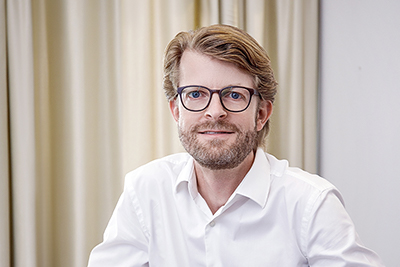
PD Dr. med. Oliver Scheufler, a specialist in plastic, reconstructive, and aesthetic surgery and the author of this website, would be happy to meet with you for a personal consultation. In addition to his work at the AARE KLINIK, PD Dr. Scheufler is also active in research and completed his habilitation at the University Hospital of Basel. As a result, the University of Basel awarded him the title of Privatdozent. He has also served as a visiting professor at Duke University (USA).